A well-constructed basketball court is more than just a flat surface with hoops—it’s a space where athletes train, compete, and enjoy the game. To ensure consistent gameplay and safety, two vital elements must be considered: accurate court measurements and proper resurfacing techniques, especially for synthetic courts.
The importance of precise basketball court measurement cannot be overstated. Regulation measurements ensure a standardized playing field, which is essential for professional, collegiate, and school-level competitions. A full-size professional court, such as those used in the NBA, measures 94 feet in length and 50 feet in width. High school courts are slightly shorter, typically 84 feet long but maintain the same 50-foot width.
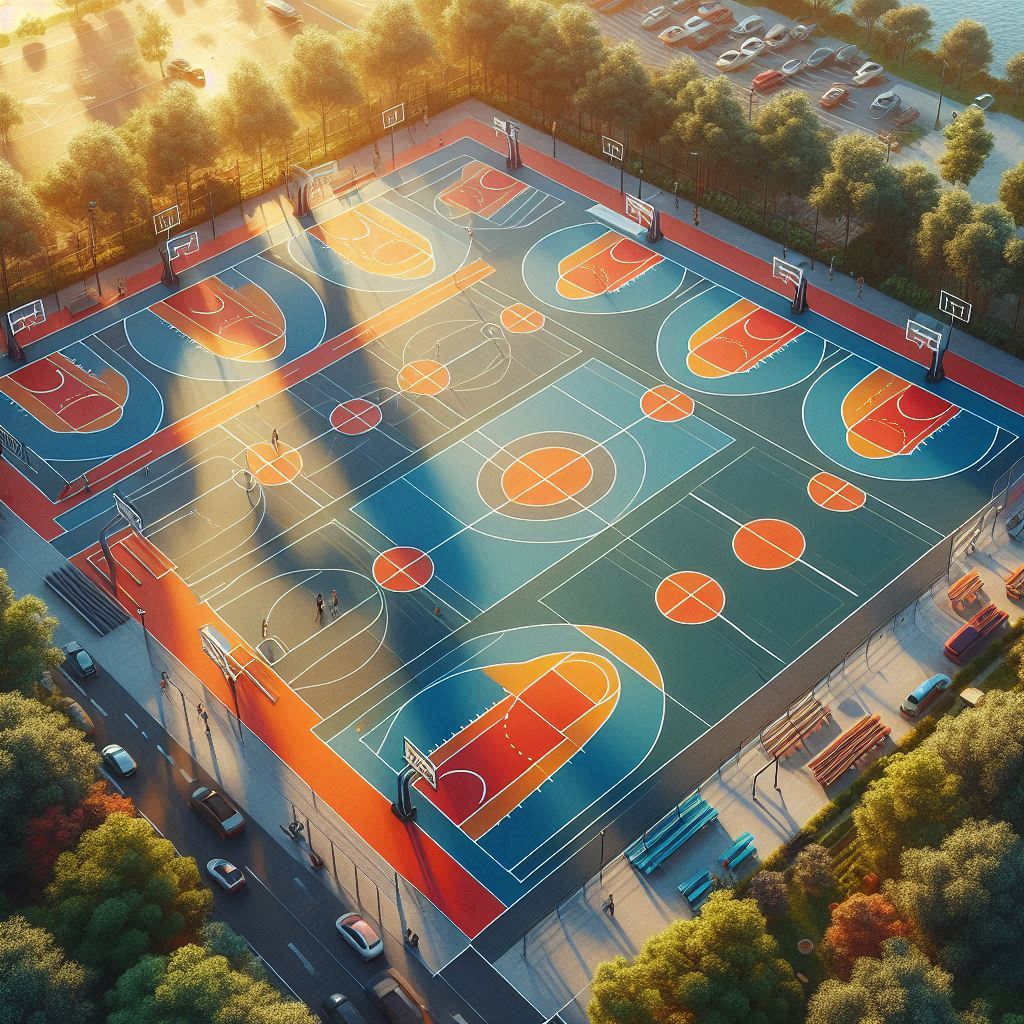
Key elements within the court also have specific measurements. The free-throw line sits 15 feet from the backboard, while the three-point line varies—23.75 feet from the basket in the NBA, and around 19.75 feet for high school. The paint or key area is 16 feet wide in professional courts and 12 feet in high school courts. Accurate marking of these dimensions helps ensure fairness and uniformity in games, no matter the location or skill level.
In addition to proper measurement, maintaining the court’s surface is vital for safety and performance. Over time, even the best materials wear down due to constant use, weather, and environmental exposure. For facilities that use modern flooring, synthetic basketball court resurfacing becomes a necessary maintenance step.
Synthetic surfaces, such as modular polypropylene tiles or acrylic-coated concrete, offer great durability and performance. However, after years of exposure to UV rays, temperature changes, and physical wear, the court can become faded, slippery, or uneven. Resurfacing helps restore the surface’s grip, color, and bounce quality, making it safer and more enjoyable for players.
The resurfacing process typically includes cleaning the surface thoroughly, repairing any cracks or damaged tiles, and applying a new topcoat. For acrylic surfaces, new coatings are applied in multiple layers, followed by court line painting. In the case of interlocking tile systems, damaged tiles can be individually replaced before resealing the surface.
Resurfacing not only improves aesthetics and gameplay but also extends the lifespan of the court, protecting the investment made during initial construction. Regular inspections and timely maintenance reduce the need for full replacements and lower long-term costs.
 pulsemarket
Leave a comment