Maintaining a tennis court not only ensures its longevity but also enhances the playing experience. Whether you’re a club owner, school administrator, or private homeowner with a court, understanding the fundamentals of tennis court maintenance is crucial. Equally important is knowing the official tennis court dimensions to ensure the surface adheres to international standards.
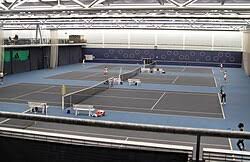
Importance of Tennis Court Maintenance
Routine maintenance of tennis courts preserves the surface quality, prevents injuries, and reduces the need for costly repairs. Maintenance varies depending on the surface type—hard, clay, or grass. Common practices include:
- Surface Cleaning: Removing debris, leaves, and algae to prevent surface deterioration.
- Crack Repairing: Timely fixing of cracks to stop water seepage, which can damage the base.
- Resurfacing: Typically required every 4-8 years for hard courts to restore the texture and bounce.
- Net and Fence Checks: Ensuring nets, posts, and surrounding fences are in good condition.
- Drainage Maintenance: Keeping drains clear to prevent water accumulation, especially in the monsoon.
A consistent maintenance routine not only protects the investment but also provides players with a safe and enjoyable environment. In humid or dusty regions, frequent surface washing and mold prevention treatments are essential. Maintenance also helps ensure the court performs consistently and reduces the risk of player injury.
Standard Tennis Court Dimensions
For a tennis court to meet the guidelines of major tennis associations like the ITF (International Tennis Federation), it must adhere to standard dimensions. Understanding tennis court dimensions is vital whether you’re constructing a new court or upgrading an existing one.
Here are the standard measurements:
- Singles Court: 78 feet long and 27 feet wide.
- Doubles Court: 78 feet long and 36 feet wide.
- Service Boxes: Divided into two equal rectangles on each side of the net.
- Net Height: 3 feet at the center and 3.5 feet at the posts.
- Run-off Areas: An additional 21 feet behind each baseline and 12 feet on each side is recommended for safe player movement.
These dimensions are not just guidelines—they directly impact gameplay. A court built to incorrect specifications can hinder training, affect competitive fairness, and reduce player comfort. Ensuring the proper layout from the start saves future headaches and aligns the space for official matches or coaching.
Final Thoughts
Proper tennis court maintenance and adherence to official court dimensions are foundational to building and preserving a professional-level playing surface. Whether you’re investing in a new court or maintaining an existing one, these two aspects should never be overlooked. For the best results, it’s advisable to consult with experienced professionals who understand surface types, climate conditions, and international standards.
 pulsemarket
Leave a comment