In today’s fast-paced educational environment, hands-on learning plays a vital role in developing a child’s creativity and curiosity. Tools like a science model and science kit have transformed the traditional way of learning by allowing students to explore complex scientific principles through interactive, practical experiences. These learning aids not only make science fun but also help in building a strong foundation in physics, chemistry, biology, and technology.
A science model is a physical representation of a scientific concept, mechanism, or phenomenon. It helps students visualize ideas that are often difficult to understand through textbooks alone. For instance, a model of the solar system can demonstrate planetary motion, while an electric circuit model can show how current flows through conductors and resistors. These models make abstract theories tangible, enhancing comprehension and retention among learners of all ages.
Science models are used extensively in schools, exhibitions, and science fairs to demonstrate innovation and creativity. They also promote problem-solving and analytical thinking, as students must plan, design, and construct their models with precision. Whether it’s a working volcano model, a wind turbine, or a robotic arm, creating a science model encourages experimentation, teamwork, and independent thinking. It allows students to apply theoretical knowledge to real-world problems, which is the essence of scientific learning.
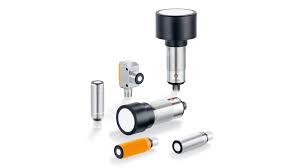
On the other hand, a science kit is a complete set of tools and materials that help learners perform experiments easily and safely. A good science kit includes components like wires, batteries, sensors, magnets, and various lab essentials that allow students to explore different branches of science. From basic experiments like growing crystals or making slime to advanced projects involving circuits, robotics, and sensors, science kits cater to learners of different ages and skill levels.
One of the main benefits of a science kit is that it makes learning engaging and accessible. Instead of reading theories passively, students can conduct hands-on experiments that bring lessons to life. For teachers and parents, these kits serve as excellent teaching resources that simplify complex concepts and spark curiosity among young minds. Many modern science kits are also designed to integrate STEM (Science, Technology, Engineering, and Mathematics) learning, encouraging kids to explore fields like electronics, coding, and environmental science from an early age.
Moreover, science models and kits are not limited to schools—they are increasingly popular among hobbyists, young innovators, and DIY enthusiasts. Many educational organizations and online platforms now offer advanced science kits that include sensors, microcontrollers, and components for building smart devices, renewable energy projects, and robotic systems. This not only develops technical skills but also fosters innovation and creative problem-solving.
 pulsemarket
Leave a comment