There’s a certain smell to a tennis court on a warm afternoon. A mix of sun, dust, maybe a hint of rubber or clay, depending on where you are. Step onto the surface and you can usually tell within a few strides whether today’s session is going to feel smooth or a little punishing. We don’t talk about that enough — how the ground beneath us quietly shapes the entire experience.
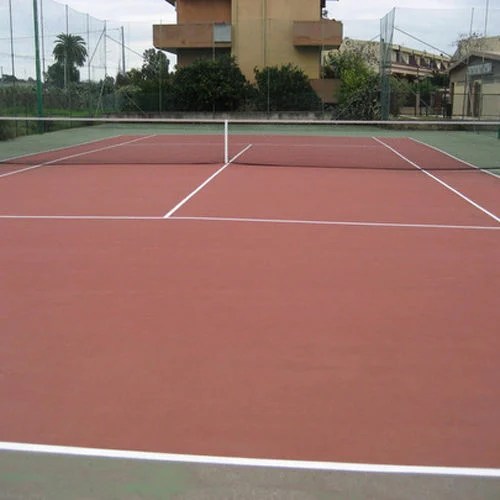
Most players focus on rackets, strings, shoes. All important, sure. But the surface? That’s the stage. It decides how the ball behaves, how your body absorbs impact, and how long you’ll feel those rallies in your knees the next morning. The choices behind tennis court materials aren’t just technical or budget-driven. They’re philosophical, in a way. They reveal what kind of game the court is meant to host.
Hard courts, for example, are often treated as the default. They’re everywhere — public parks, schools, clubs. They offer a predictable bounce, which players tend to like. There’s comfort in consistency. But spend a few hours grinding from the baseline and you’ll notice the downside. Hard surfaces don’t give much back. Every stop, every pivot, every split step sends a little message up your legs. Over time, those messages add up.
Clay courts tell a different story. Slower pace, higher bounce, longer rallies. They’re kinder to joints, but they demand patience and footwork. Sliding looks elegant when done well and downright dangerous when it’s not. Clay also asks for more maintenance, more care, more forgiveness from the people who manage it. It’s a surface with personality — sometimes moody, sometimes magical.
Then there’s grass, the romantic ideal. Soft, fast, and famously unpredictable. Playing on grass feels like borrowing someone else’s living room — beautiful, but you’re always a bit afraid of scuffing the floor. Grass courts require constant attention, and that’s why they’re rare outside elite venues. Still, for many players, nothing quite compares to that low skid and quick point.
In recent years, newer synthetic surfaces have entered the conversation. Cushioned acrylics, modular tiles, hybrid systems that promise the best of all worlds. Some of them are genuinely impressive, especially when designed with player comfort in mind. Others feel like compromises — decent at everything, exceptional at nothing. As with most things, the execution matters more than the label.
What often gets overlooked is how climate influences these choices. Heat, cold, rain, and humidity all interact differently with various surfaces. A material that works beautifully in a dry, mild region might struggle elsewhere. Courts crack, fade, or hold water in ways no one anticipated. When a surface fails, players feel it immediately, even if they can’t quite articulate why.
This becomes especially obvious on an outdoor tennis court where nature is always part of the equation. Sun beats down, rain shows up uninvited, leaves and dust settle in corners. Outdoor courts have to be resilient. They need drainage, UV resistance, and textures that stay playable when conditions aren’t ideal. A court that feels perfect indoors might feel slippery or harsh outside if it wasn’t designed for exposure.
There’s also an emotional side to outdoor play that surfaces amplify. The sound of the ball changes. The way your shoes grip or slide changes. Even the color of the court affects perception — lighter shades reflect heat, darker ones absorb it. These details subtly influence how long people stay, how relaxed they feel, how often they come back.
Maintenance is where good intentions often collide with reality. A surface might be excellent on paper, but if it requires constant upkeep that no one budgets for, it won’t age gracefully. Cracks appear. Lines fade. Small problems grow. Players adapt, but they shouldn’t have to. The best courts are the ones that hold up quietly, without demanding constant attention.
I’ve played on courts that looked rough but felt fantastic, and on pristine ones that somehow drained the joy out of every rally. That contrast sticks with you. It reminds you that performance isn’t just about appearance or marketing claims. It’s about how materials behave under real feet, real weather, real wear.
For facility owners, the pressure is real. Choose something too cheap, and you’ll pay for it later. Choose something too fancy, and maintenance costs might spiral. The sweet spot usually lies in understanding who will use the court most, how often, and for what purpose. Juniors training daily have different needs than casual weekend players. There’s no universal answer, and that’s okay.
 pulsemarket
Leave a comment